Deutsch
 한국어
 日本語
 Français
 Português
 Español
 Русский

1. Core properties of the material itself
This serves as the foundation for determining heat dissipation capability, which is primarily assessed based on two key metrics:
Thermal Conductivity: This is the most critical parameter. While the theoretical thermal conductivity of aluminum nitride (AlN) ceramics is very
high—approximately 320 W/(m·K)—actual values vary depending on factors such as material purity and the sintering process, typically falling
within the range of 170–280 W/(m·K). Higher thermal conductivity translates to superior heat dissipation performance.
Coefficient of Thermal Expansion (CTE): This determines how well the ceramic substrate matches other components, such as the chip or metal baseplate. If there is a significant mismatch in the CTE, temperature fluctuations can generate stress, potentially leading to cracking and, consequently, the disruption of the heat dissipation path.
2. Product Structure and Dimension Design
A well-designed structure allows for the full realization of heat dissipation potential, primarily concerning three aspects:
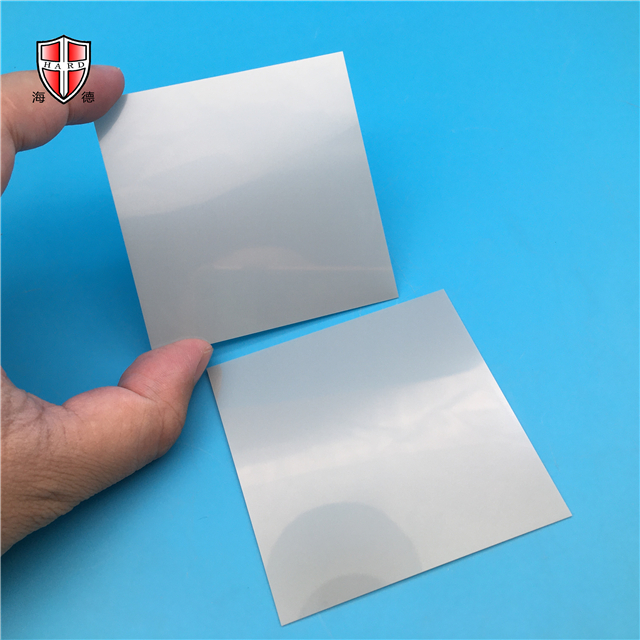
Thickness: As previously discussed, there is no single optimal value. Excessive thickness increases thermal resistance, while insufficient thickness
compromises mechanical strength, making the component prone to damage. A balance must be struck between thermal resistance, mechanical
strength, and available installation space; the common range of 0.25–1.0 mm is the result of such a trade-off.
Surface Flatness: A flatter surface ensures a larger contact area with thermal interfaces (such as chips or heat sinks) and minimizes gaps. Since
air—which may occupy these gaps—has extremely low thermal conductivity, it significantly increases contact thermal resistance and reduces
heat dissipation efficiency.
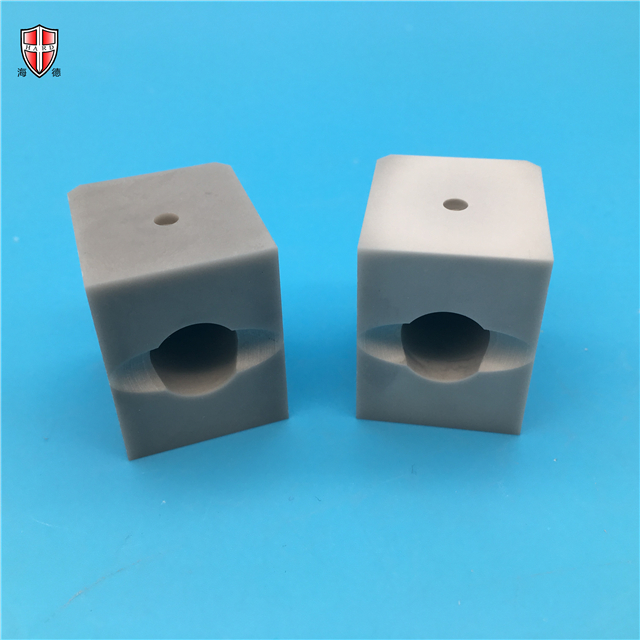
Shape and Apertures: Complex geometries (e.g., those featuring grooves or raised bosses) or the inclusion of apertures may be necessary to
accommodate component installation; however, these features can also reduce the effective heat dissipation area or increase localized thermal
resistance. Such designs must be optimized based on the specific application requirements.
3. External matching conditions for application
Even if a ceramic component possesses excellent intrinsic properties, improper installation or poor integration can significantly diminish its
cooling performance.
Interface Materials: Thermal interface materials—such as thermal grease or thermal pads—are typically required between the ceramic
component and the chip or heatsink. The thermal conductivity, thickness, and fit of these materials directly influence the contact thermal resistance.
Cooling System Compatibility: A ceramic component is merely one part of the thermal path; the overall cooling effectiveness ultimately depends
on the capacity of the downstream cooling system (e.g., heatsinks, fans, or liquid cooling setups). If the cooling system lacks sufficient capacity, the
heat conducted by the ceramic component cannot be dissipated efficiently, thereby limiting the overall cooling performance.
Installation Pressure and Sealing: Proper pressure must be applied during installation to ensure a tight fit between the ceramic component and
adjacent parts, minimizing any gaps. Furthermore, the quality of the seal affects the operating environment; for instance, in humid or dusty conditions,
a poor seal can lead to a degradation in the performance of the cooling components.